
 The negotiation between teacher and student begins as the narrator tries to convince his teacher that his incomplete homework is not his fault. Subsequently more and more absurd, humorous homework excuses are revealed on each page. Giant lizards invaded the neighborhood, there was a problem with carnivorous plants, and elves hid all of the student’s pencils. But the teacher cannot be outsmarted: she’s read the same book. Detailed pen-and-ink illustrations enhance the hilarious text, exemplifying the great lengths students will go to in hopes of avoiding homework. cc The negotiation between teacher and student begins as the narrator tries to convince his teacher that his incomplete homework is not his fault. Subsequently more and more absurd, humorous homework excuses are revealed on each page. Giant lizards invaded the neighborhood, there was a problem with carnivorous plants, and elves hid all of the student’s pencils. But the teacher cannot be outsmarted: she’s read the same book. Detailed pen-and-ink illustrations enhance the hilarious text, exemplifying the great lengths students will go to in hopes of avoiding homework. cc |
| Title: I Didn’t Do My Homework Because Author: Davide Cali Illustrator: Benjamin Chaud Publisher: Chronicle Books LLC Copyright: 2014 Original language: English ISBN: 978-1-4521-2551-0 Hardcover pages: 44 Age range: 6 up Genre: Picture book Author’s residence: France Illustrator’s residence: France Subjects: Europe, France, Homework, Humorous stories, Schools, Western Europe |
I Didn’t Do My Homework Because
Leave a reply
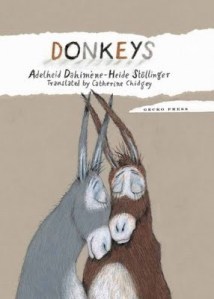 In this simple tale, two stubborn donkeys, Jack and Jenny, have loved each other since the day they first met. When Jack forgets a special day, their silver anniversary, a silly argument ensues and the pair decides to part ways in search of their perfect match. The cow is too spotted, the goat is too scrawny, and the donkeys fail to find a suitable replacement. With the help of a lonesome camel, they realize that no other match is as befitting as the two of them together. Intricate pastel illustrations convey each donkey’s unique personality. mjw
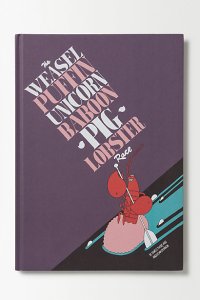 In this psychedelic children’s story, the reader follows six competitive creatures as they claw, charge, and cheat their way to the finish line using custard trampolines, banana diggers, and chocolate submarines to navigate through each animal’s unique terrain. A lone competitor stays truthful, giving a twist to the story’s end. His morality helps convey an important lesson: cheats never prosper. Dream-like illustrations complement imaginative, quirky rhyme. A simple recipe for cheat’s fool, a dessert, follows the text. cc
 Through fictional first-person poems and brief non-fiction prose, thirteen different Latino and Latina young people in the U.S., who have diverse backgrounds and experiences are introduced to readers. The poems are reflective and heartwarming and provide specific stories. The nonfiction essays explain historical and social context, the Ladino language, the Chinese and Japanese presence in Latin America, African roots, Latino immigration to the U.S., U.S.-Cuban relations, environmentalists, and more. Bold, hand-cut illustrations, a bibliography for teachers and parents, and additional resources for young people complete this celebration of the diversity of the Latino community. mjw
 Lottie keeps her found treasures and secrets locked in a battered brown leather suitcase that was a gift from her grandfather. Sometimes she wishes there was someone with whom she could share her secrets. But the other children find Lottie odd and her suitcase ugly. Leon, the boy next door, sits alone every day in his back garden playing his tuba to Mozart, his cat. One day, the cat disappears and the music stops. These two different children become friends. Lovely drawings with old photos and collage support this delicate story of acceptance and understanding. mjw
 Eleven-year-old Thomasine lives in her great-great Aunt Henrietta’s dusty, dark house with her father and her aunt, uncle, and cousins. The relatives are all troubled in one way or another. There are no mirrors in the house. Except one night, the youngest cousin finds a wardrobe, filled with all the missing mirrors. The mirror images reveal other sides of the old house and a mysterious young girl. Twenty magical black and white illustrations enhance this moving ghost story. mjw
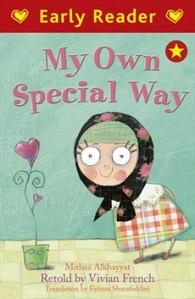 Hamda feels left out. She wants to make necklaces, go shopping, and bake cakes like her older sisters do. She has also made up her mind that she wants to wear the veil. She chooses four different scarves and unsuccessfully tries four different ways to wear them. She finally finds her own special way to prove she’s a big girl. Told in five short chapters and illustrated with bold, colorful patterns, this entertaining story focuses on the Muslim experience of wearing the veil mjw
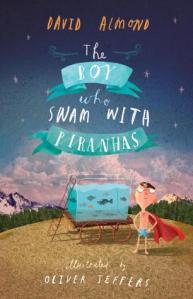 When Stanley Potts’s Uncle Ernie, who cans pilchards, sardines, and mackerel in the living room, tins Stanley’s beloved goldfish, Stanley decides to leave home. He joins a traveling carnival of wacky characters and gets a job washing plastic ducks for the “Hook A Duck” master, Mr. Dostoyevsky. He meets Pancho Pirelli, who swims with piranhas and believes that Stanley could be his successor. Wonderful and quirky things happen to “good and true” Stanley as he seeks his own way. Stylized cartoon drawings add humor. mjw
 In 2002, ten-year-old Enaiatollah Akbari’s village in Afghanistan fell prey to the Taliban. His mother sent him alone to fend for himself. Dangerous border crossings, trekking on foot across snow-covered mountains in Turkey, hiding in a false bottom of a truck, and steering an inflatable dinghy to Greece are some of the seemingly insurmountable and unimaginable obstacles he faced on his five year journey to Italy, where he sought political asylum. This is an incredible story of courage, hope, and survival reconstructed from Eniat’s memories by Italian novelist Fabio Geda. A map of Eniat’s journey is included. mjw
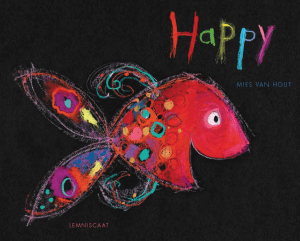 Twenty-one emotions that a child encounters are portrayed by fish in this splashy, simple concept book. Each double page spread presents one dazzling fish against a dark, deep sea background, expressing a particular emotion and its name in a font style and color that also conveys the emotion. Fish are curious, proud, loving, confused, shocked, and much more until finally delighted. The red, turquoise, chartreuse, magenta, and other neon-like oil pastel scribbly drawings are radiant. mjw
 In these thirteen eccentric fairytales, written by one of the most successful twentieth century French authors for children, quick-witted young people overcome greedy kings, wicked witches, giants, naughty pigs, magical spells, and even silly names like Lustucru. Shoes fall in love, a doll can see everything, and a potato wants to be a French fry. Absurd line drawings illustrate these tales where good is always rewarded and evil is always punished. mjw
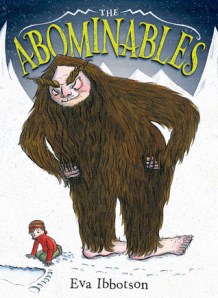 While on an expedition to the Himalayas, aristocratic young Lady Agatha Farlingham is kidnapped by a yeti father and his family. She stays to teach the kindly yeti English speech, good manners, and fairytales. Decades later, she transports the yetis back to her ancestral home in England for safety. They journey through Asia and Europe, liberate a zoo, save Alpine rescue dogs, and interrupt a Spanish bullfight. Upon arrival to England, the yetis are met by hateful Abominable snowman hunters. But, British school children and royalty save the day in this whimsical story with its message of human rights and environmentalism. mjw
 OmniLibros