
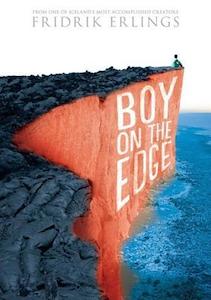
 Teenage Henry, with a club foot, a terrible stutter, and dyslexia, is the target of unrelenting bullying. After committing several violent acts at school and at home, he is sent to the Home of Lesser Brethren, a desolate farm for troubled boys, in the middle of the lava fields on the Icelandic coast. The farm is run by the frightening and misguided Reverend Oswald and his loving wife. Henry finds some peace in tending the cows and sheep, but he is lonely and desperate for a friend. Each time he trusts someone, he is betrayed. The prologue explains that the story is a flashback written by Henry’s friend. Not until the end, do we learn who the friend is. This sophisticated and engrossing story of an outcast’s hope is a clear tribute to Antoine de Saint-Exupery’s The Little Prince. The poetic language describes moments of tenderness and also unspeakable cruelty. It will transport you to the cold, harsh, yet comforting Icelandic landscape. mjw Teenage Henry, with a club foot, a terrible stutter, and dyslexia, is the target of unrelenting bullying. After committing several violent acts at school and at home, he is sent to the Home of Lesser Brethren, a desolate farm for troubled boys, in the middle of the lava fields on the Icelandic coast. The farm is run by the frightening and misguided Reverend Oswald and his loving wife. Henry finds some peace in tending the cows and sheep, but he is lonely and desperate for a friend. Each time he trusts someone, he is betrayed. The prologue explains that the story is a flashback written by Henry’s friend. Not until the end, do we learn who the friend is. This sophisticated and engrossing story of an outcast’s hope is a clear tribute to Antoine de Saint-Exupery’s The Little Prince. The poetic language describes moments of tenderness and also unspeakable cruelty. It will transport you to the cold, harsh, yet comforting Icelandic landscape. mjw |
| Title: Boy On The Edge Author: Fridrik Erlings Publisher: Candlewick Copyright: 2012 Original language: Written in English but based on a book the author had previously written in Icelandic. ISBN: 978-0-7636-6680-4 Hardcover pages: 240 Age range: 14 and up Genre: Fiction – novel Book setting: Iceland Author’s ethnicity: Icelandic Author’s residence: Iceland Subjects: Clergy, Club Foot, Dyslexia, Foster Children, Iceland, Northern Europe, Stutter, Teenage Boys |
Boy On The Edge
Leave a reply

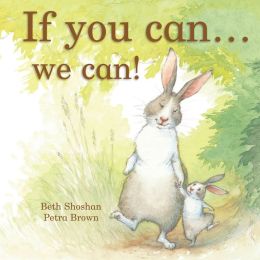 Two rabbits, one big and one little, decide to be friends forever in this touching tale with a very positive message regarding friendship. They giggle, sing songs, tell stories, and run around. All of these activities are enjoyed together. The simple, heart-warming text compliments fun, lively illustrations. Every reader will enjoy this story that exemplifies what friends are, what they do, and how friends make us feel. cc
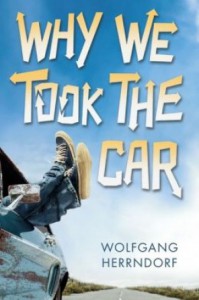 German eighth grader, Mike Klingenberg, is a boring kid with no friends. He is left alone for two weeks while his mother is in rehab and his father is away on a “business trip” with his attractive secretary. Andrej Tschichatschow, aka Tschick, is a Russian immigrant, the new kid in school, and also not popular. When Tschick shows up in a stolen beat-up Soviet-era car, the boys head out of Berlin on a road trip adventure across Germany. They have no map, no cell phone, and no plan. They meet some bizarre characters, dodge the police, and travel the autobahn. This is an insightful, exuberant, and highly engaging coming of age novel. mjw
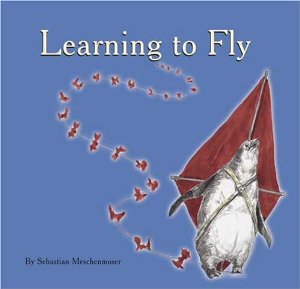 The deadpan, bearded storyteller declares, “Last winter, I found a penguin.” The wayward penguin knew how to fly until some other birds told him that he couldn’t fly. That’s when he crashed. The man takes the penguin home, determined to help the little penguin out. They eat fish sticks together, test the penguin’s body stress level in a clothes dryer, and try all kinds of schemes to get him airborne. Fireworks, ites, and glued-on feathers don’t do the trick. Finally, when he sees a group of penguins flying above, he stretches his wings and takes off. And he “flew pretty well…for a penguin.” The straightforward tone and black-and-white pencil sketches with splashes of color will delight children and adults. This contemporary fable is about believing in yourself and dreaming and creative problem solving. mjw
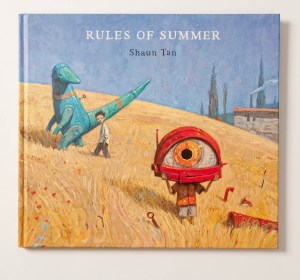 In this fantastical picture book, the big brother sets the rules. The rules and consequences are arbitrary and unpredictable. “Never leave a red sock on the clothesline” is followed by an image of a gigantic red rabbit glaring at the terrified boys. “Never be late for a parade” leads to a procession of weird mechanical toys. And finally, “Always know the way home” shows the two boys safely sitting on the couch watching TV. The living room walls are covered with images of all the out-of-this-world creatures they encountered in the book. Lavish, thick oil paintings epics the mysterious world of the two boys’ imagination. An app of the story, published by Wheelbarrow- Australia, draws readers into Tan’s surreal landscape. mjw
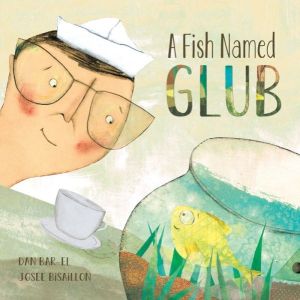 As Glub the fish swims around in his glass bowl on the counter, he ponders big questions in life: “Who am I?” “What do I need?” “What is a home?” He finds the answers he seeks by listening to the lively, colorful characters who eat at Foster G. Williker’s diner. Through Glub, these characters, including Foster, find answers of their own as they look into the bowl while Glub swims around painting pictures in bubbles of their dreams and long forgotten desires. This power to show people their dreams comes in handy as Glub is able to help Foster achieve his desperate desires of adventure and change . Rich illustrations accompany lively, lyrical dialogue that alternates between humans and Glub’s personal thoughts. cc
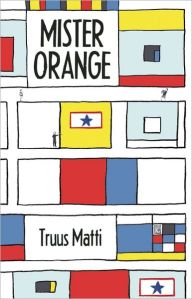 In 1943, when his older brother joins the army, 12 year-old Linus Muller, takes over the delivery job in his family’s grocery store in Manhattan. He befriends an eccentric customer, Mr Orange, who always orders a crate of oranges and is based on the Dutch painter, Piet Mondrian. They discuss the war, music, art, comic books and superheroes, and imagination. This is a first-rate historical novel about the artist and Linus Muller’s changing perception of the war. An afterword offers facts about Mondrian’s work and years in New York City. Further Resources for reading, watching on the Internet, and viewing Mondrian’s art in museums are also included. mjw
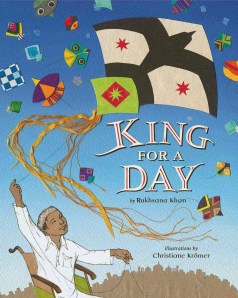 Malik, a boy in a wheelchair, does batter with other kites in the Basant festival from his rooftop in Lahore, Pakistan. With Falcon, his specially built-for-speed kite, he captures many kites including two flown by the bully next door. His good natured spirit shines through when the bully takes a young girl’s kite and Malik, as king for the day, helps the girl. Cut paper, yarn, Pakistani fabric, ribbon and pencil sketch collage illustrations from varying perspectives provide a kite’s eye view of the festival. A pronunciation guide and an afterword about the celebration of Basant are included in the book, and a teacher’s guide is available on the
 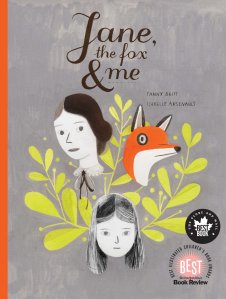 Adolescent Helene has been ostracized by girls who had once been her friends. They scribble insults on the school walls and snicker about her on the bus. Her escape is Charlotte Bronte’s Jane Eyre. When she goes on a camping trip with her class, she discovers an amazing red fox and a new friend, Geraldine. The mixed-media illustrations alternate between Helene’s sad, black-and-white world and Jane Eyre’s bold colorful English countryside. Helene’s world changes as she learns that she is worthy of friendship. mjw
