

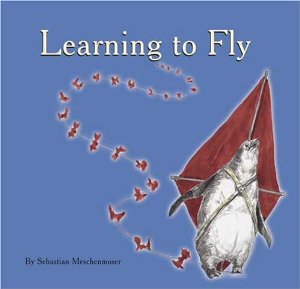
 The deadpan, bearded storyteller declares, “Last winter, I found a penguin.” The wayward penguin knew how to fly until some other birds told him that he couldn’t fly. That’s when he crashed. The man takes the penguin home, determined to help the little penguin out. They eat fish sticks together, test the penguin’s body stress level in a clothes dryer, and try all kinds of schemes to get him airborne. Fireworks, ites, and glued-on feathers don’t do the trick. Finally, when he sees a group of penguins flying above, he stretches his wings and takes off. And he “flew pretty well…for a penguin.” The straightforward tone and black-and-white pencil sketches with splashes of color will delight children and adults. This contemporary fable is about believing in yourself and dreaming and creative problem solving. mjw The deadpan, bearded storyteller declares, “Last winter, I found a penguin.” The wayward penguin knew how to fly until some other birds told him that he couldn’t fly. That’s when he crashed. The man takes the penguin home, determined to help the little penguin out. They eat fish sticks together, test the penguin’s body stress level in a clothes dryer, and try all kinds of schemes to get him airborne. Fireworks, ites, and glued-on feathers don’t do the trick. Finally, when he sees a group of penguins flying above, he stretches his wings and takes off. And he “flew pretty well…for a penguin.” The straightforward tone and black-and-white pencil sketches with splashes of color will delight children and adults. This contemporary fable is about believing in yourself and dreaming and creative problem solving. mjw |
| Title: Learning To Fly Author: Sebastian Meschenmoser Illustrator: Sebastian Meschenmoser Publisher: Kane Miller Book Publishers Copyright: 2011 Original language: German Translator: Margarita Santos Cuesta Original title: Fliegen lernen Original publisher: Esslinger Verlag J.F. Schreiber Original copyright: 2005 ISBN: 978-1-1935279-99-0 Hardcover pages: 56 Age range: 4 up Genre: Picture book Author’s residence: Germany Awards: 2008 Bank Street College Best Children’s Books of the Year Subjects: Germany, Self-esteem, Self-respect, Penguins, Persistence, Western Europe |
Learning To Fly
Leave a reply
 This 1932 masterpiece is a picture of life as it once was in Norway. Ola is a young boy who travels from one end of Norway to another. He meets new friends, attends a traditional bridal feast, gets caught in a tree, and learns folklore from fishermen before he returns home. Charming stone lithographs illustrate the fantastic Northern landscape. mjw
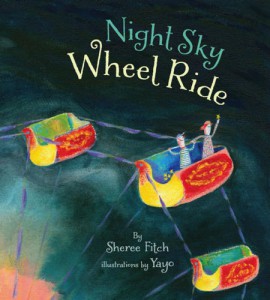 This happy book celebrates the first ferris wheel ride of a young brother and sister. The brilliant, imaginative illustrations are filled with scenes of cotton candy trees, whirling ferris wheel cars, jelly bean people, and dot-to-dots with stars. Rhymed and unrhymed poetry dances on the pages. mjw
 Rico is “a child proddity,” not prodigy, because his brain works like a “drum full of bingo balls.” He is also directionally challenged. His wondering about a single strand of spaghetti on the sidewalk outside his Berlin apartment leads him to Oscar, who is a true child prodigy. Oscar has a high IQ, a lot of anxieties, and he always wears a blue motorcycle helmet to protect his brain. When Oscar is kidnapped, Rico sets out to find his friend and catch the serial kidnapper know as Mr. 2000. This short novel with compelling characters is thoughtful and fun. mjw
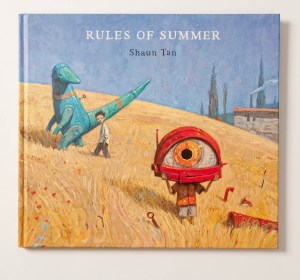 In this fantastical picture book, the big brother sets the rules. The rules and consequences are arbitrary and unpredictable. “Never leave a red sock on the clothesline” is followed by an image of a gigantic red rabbit glaring at the terrified boys. “Never be late for a parade” leads to a procession of weird mechanical toys. And finally, “Always know the way home” shows the two boys safely sitting on the couch watching TV. The living room walls are covered with images of all the out-of-this-world creatures they encountered in the book. Lavish, thick oil paintings epics the mysterious world of the two boys’ imagination. An app of the story, published by Wheelbarrow- Australia, draws readers into Tan’s surreal landscape. mjw
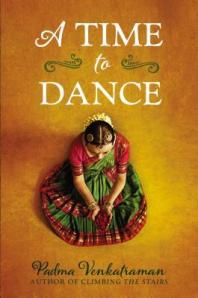 Teenage Veda, who studies classical Indian dance Bharatanatyam, is injured in a car accident and her leg has to be amputated below the knee. She is devastated, but an American doctor understands her love of dance and designs a special prosthetic limb for her. Veda starts dancing all over again. She meets Govinda, a student teacher, who shows her a new way to bring joy to her dancing and who becomes her love interest. This enthralling story of Veda’s journey and of familial relationships in modern India is told in verse that captures the fascination of India. mjw
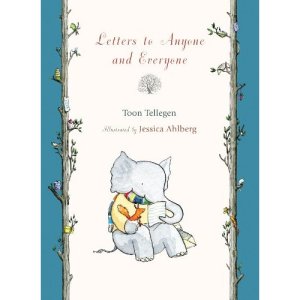 Snails, elephants, bears, ants, crickets, and squirrels write whimsical letters to one another. Twenty-three little stories are are included. Some are humorous, like The Elephant who cannot keep his balance and The Bear who just wants to eat cake. Some are philosophical, like The Squirrel who wonders about the table and writes a letter to a letter. Tellegen’s world of the imagination is perfectly complemented by Ahlberg’s delicate watercolors. A ribbon bookmark adds to the charm of this little book. mjw
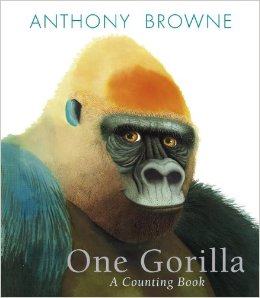 One gorilla, two orangutans, and three chimpanzees lead the way in this portrait gallery of primates. Every face has a distinctive personality and quirky details Larger, more rare creatures appear first, progressing to smaller, more numerous primates like eight macaques, nine colobus monkeys, and ten lemurs. This effective counting book ends with a group portrait of humankind- many ages and ethnicities. “All primates. All one family. All my family…and yours!” Naturalistic, intense watercolors will capture the attention of small children. mjw
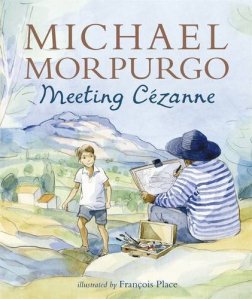 Ten-year-old Yannick leaves Paris to stay with his aunt and uncle at their inn in Provence. He is excited to go because Provence is where Cezanne, “the greatest painter in the world,” painted his picture. He works in the inn, setting tables, clearing tables, filling carafes of water, and cutting bread. Uncle Bruno teaches him to cook and make chocolate mousse and creme brulee. When a famous painter visits the inn and Yannick accidentally throws the drawing the painter scribbled on the paper tablecloth into the fireplace, he follows him back to his chateau to ask for another drawing. Yannick thinks the artist is Cezanne, but the artist signs another name, Picasso. Soft watercolor illustrations decorate the charming description of the culture of 1960s Provence. mjw
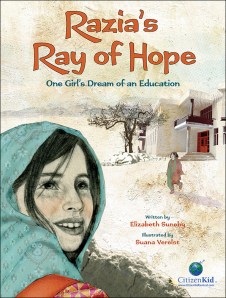 When young Razia learns that there will be a new school for girls in her Afghan village, she is determined to attend. Her baba gi (grandfather) supports her, but her father and brothers refuse to give her permission. The school’s founder assures them that Razia will be safe and that allowing her to go to school will be for the good of the family, the village, and the country. The book is a fictionalized account of the building of the Zabuli Education Center, a school for girls in the Afghan village of Deh’Subz. The story is enhanced by photo, fabric, and drawing collage. Illustrations capture the beauty and harsh realities of the small village. Background information on the lack of girls’ education worldwide; a brief biography of Razia Jan, the school’s founder; a glossary; and classroom activities accompany this powerful book. mjw
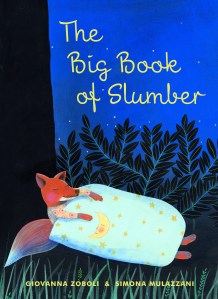 In this quiet, rhyming couplet bedtime story, we meet countless cozy animals settling in their beds. Camels snore under quilts in their bunk beds. Lion sleeps on his white lace pillow. Snake dreams in his elongated twin bed. Monkey in his striped pajamas is tucked in with a banana. Paint and collage illustrations are restful and have a folk like quality. mjw
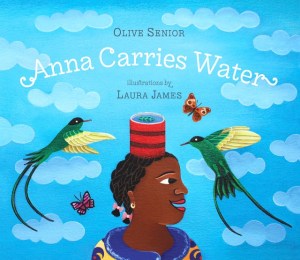 Anna, the youngest child in her large Jamaican family, wants to fetch water and carry it on her head like her brothers and sisters do. But, she cannot even balance an empty coffee can on her head. Anna is determined and she finally does succeed when the cows in Mister Johnson’s field frighten her and she runs home with her full coffee can on her head. She doesn’t spill a drop. The Jamaican landscape, a Jamaican flag, dasheen leaves, and Anna’s family are presented in interesting, bold acrylic paintings in tropical colors. mjw
 OmniLibros