
 In 1845, The Potato Famine devastates Ireland. More than a million Irish people die from starvation and disease, and another two million emigrate to Canada, the U.S., and Britain. In 1847, the Choctaw people in America are still healing from their hardships on the Trail of Tears. They collect money to donate to the struggling Irish people. In 2017, seven generations later, the Irish build a statue to remember their connection to the Choctaw Nation. It is the shape of twenty-foot-tall eagle feathers in a bowl. In 2000, in the American Southwest, the Navajo and Hopi Nations are greatly affected by the COVID-19 pandemic. The Irish people remember the Choctaws’ kindness, and they pay it forward by donating over three million dollars to the members of the Navajo and Hopi Nations. The money was given by many ancestors who received the gift that the Choctaws gave to Ireland during the Potato Famine. Today and always, the four nations are unified by the empathy they have learned from hardship. They pass generosity and compassion as kindred spirits. Enchanting acrylic on canvas illustrations further distinguish this inspiring book. Back matter includes author’s and illustrator’s notes, historical information about the Trail of Tears and the Irish Potato Famine, more information on the nations today, a very helpful timeline, a glossary, and suggestions for learning more. mjw In 1845, The Potato Famine devastates Ireland. More than a million Irish people die from starvation and disease, and another two million emigrate to Canada, the U.S., and Britain. In 1847, the Choctaw people in America are still healing from their hardships on the Trail of Tears. They collect money to donate to the struggling Irish people. In 2017, seven generations later, the Irish build a statue to remember their connection to the Choctaw Nation. It is the shape of twenty-foot-tall eagle feathers in a bowl. In 2000, in the American Southwest, the Navajo and Hopi Nations are greatly affected by the COVID-19 pandemic. The Irish people remember the Choctaws’ kindness, and they pay it forward by donating over three million dollars to the members of the Navajo and Hopi Nations. The money was given by many ancestors who received the gift that the Choctaws gave to Ireland during the Potato Famine. Today and always, the four nations are unified by the empathy they have learned from hardship. They pass generosity and compassion as kindred spirits. Enchanting acrylic on canvas illustrations further distinguish this inspiring book. Back matter includes author’s and illustrator’s notes, historical information about the Trail of Tears and the Irish Potato Famine, more information on the nations today, a very helpful timeline, a glossary, and suggestions for learning more. mjw |
| Title: Kindred Spirits: Shilombish Ittibachvffa Author: Leslie Stall Widener Illustrator: Johnson Yazzle Publisher: Charlesbridge. Watertown, MA Copyright: 2024 Original Language: English ISBN: 978-1-62354-396-9 Hardcover pages: 32 Age range: 5-8 Genre: Picture Book, Nonfiction, Information Book Book setting: Ireland and U.S. Author’s ethnicity: Choctaw Nation of Oklahoma Author’s residence: McKinney, Texas Illustrator’s ethnicity: Navajo Nation in Pinon, Arizona Illustrator’s residence: Pinon, Arizona Subjects: Choctaw Indians, COVID-19, Emigration, Famine, Hopi Indians. Ireland, Navajo Indians, Potatoes, Trail of Tears |
Kindred Spirits: Shilombish Ittibachvffa
Leave a reply

 Narrated by a young refugee, this beautiful and realistic picture book tells about having to leave home and the healing power of hope. The girl and her mother used to live in an apartment with a star-shaped lamp in their window. In their new country, everything is different – the language, their apartment, and the food. One day, the mother brings home art supplies so that they can make a cardboard star just like the one they had back home. That helps to make their new place feel a little more like home. The penultimate page shows the girl with a new friend, both carrying their musical instruments. The mostly blue and yellow illustrations were created with hand drawn contours and Photoshop. An author’s note explains that the book was inspired by Desnitskaya’s experience leaving Russia after the start of the Ukraine War. It is the author’s hope that his book can help children from different countries who have lost their homes to start loving the place where they were forced to be.
 Rumi (1207-1273) was a poet, an Islamic scholar, and a Sufi mystic. He wrote in Persian/Farsi. He is one of the best-known and most widely-read poets in the world. As a child, he was enchanted by birds and books. He loved to play and dance in the garden. He had many questions, which his father answered patiently. When Rumi was older, he met Attar the great Persian poet. He read Attar’s epic poem called “The Conference of Birds” and searched for its deeper meaning. Years, later, Rumi moved to Turkey, where he met Shams, who was a great Persian spiritual teacher. Shams was a sun shining in Rumi’s heart and mind. Later, Rumi wrote his poetic masterpiece, “The Masnavi.” He also loved telling stories to children. “Be a friend to everyone” was his great message. This touching picture book biography radiates Rumi’s wisdom and warmth. Strong colors and ornamental details in the glorious illustrations feature traditional Persian clothing and motifs and distinguish the story. Back matter includes an author’s note and more information about Rumi. mjw
 Set in 1980s Vietnam, Tho and his best friend, Lam, love cricket fighting, and soccer, but there is fear in his village that twelve-year-old boys, like them, will be conscripted into the Communist army. People are trying to leave Vietnam and move to safer countries. One day, Lam and his brother disappear. Tho’s family sells their furniture to make money to send Tho and his brother, Vu, away. Vu leaves first and a year later Tho boards a small boat to escape. He stows away on a pirate boat, crosses the South China Sea, and eventually gets to a refugee camp in Palawon in the Philippines, where he stays for six months. Finally, a Canadian elementary school teacher adopts him and he flies to his new home in Toronto. This harrowing story is based on true events in the author’s life. A map, a pronunciation guide, an afterword, and a brief recent history of Vietnam further enhance Tho’s intense account of his journey.
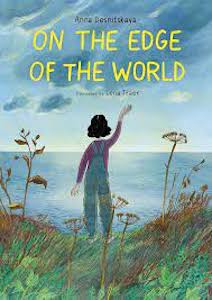 Vera and her family live on Russia’s Kamchatka Peninsula, which seems like the edge of the world. A map of the peninsula includes geographical features and native animal life. Vera shares her most valuable things – her feather collections; her favorite book: The Lion, the Witch, and the Wardrobe; her flashlight; and her favorite food – syrniki (cottage cheese and pancakes). She introduces her mom and her grandma but says that she doesn’t have any friends. She also describes her sekretik – a secret treasure of blue glass, Legos, and forget-me-nots. Lucas and his family live in a small town on the coast of Chile, which also seems like the edge of the world. A map of his country also includes geographical features and native animal life. Lucas shares his most valuable things – ammonite fossils, his soccer ball, his flashlight, his favorite food – a hamburger, and his favorite book: The Hobbit. He introduces his mom, dad, and his grandma. He, too, has no friends. One evening, both Vera and Lucas go to the beach, and blink their flashlights into the dark using the international language of Morse Code. “What if I had a friend over there, beyond the edge of the world?” If they look hard enough, they’ll find that we’re all so very similar, and connected to each other. One set of endpapers shows the Morse Code. The other endpapers present a map depicting Russia, Chile, and the 9942 miles of Pacific Ocean between the children’s homes. The interesting illustrations were created digitally in this unique flip-formatted, two-story picture book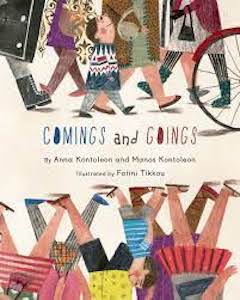
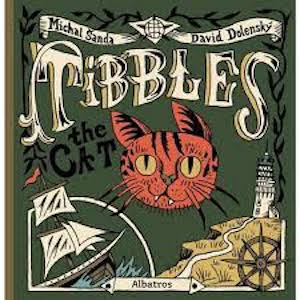 A curious house cat named Tibbles and her owner move across the world from England to a small island off the coast of New Zealand in 1894. The cat discovers a new, rare species of flightless birds – the Stephens Island Wren – that had been previously undescribed. Unfortunately, Tibbles causes the extinction of the bird by preying on it. This true story made a huge impact on the world by alerting humans to the dangers of introducing non-native animals to other parts of the world. Included are interesting facts about the bird and its discovery. The vintage-inspired illustrations, speech bubbles, and diagrams enhance this darkly comedic story that brings global awareness of the unintended consequences of human actions on the environment. mjw
