
 When Papa Rabbit doesn’t return home as expected after many seasons of working in the great carrot and lettuce fields of El Norte, Pancho sets out on a dangerous journey to find him. He packs up Papa’s favorite meal: mole, rice and beans, warm tortillas and a jug of aguamiel. A cunning coyote offers to guide Pancho on his journey in exchange for some of the sustenance he brought along. The pair travel until all the food is gone and the coyote decides he’s still hungry…for rabbit. In this allegorical tale, Tonatiuh sheds light on the hardships faced by thousands of families who seek out opportunities at better lives for their children and cross the Mexican border into the U.S. illegally. cc When Papa Rabbit doesn’t return home as expected after many seasons of working in the great carrot and lettuce fields of El Norte, Pancho sets out on a dangerous journey to find him. He packs up Papa’s favorite meal: mole, rice and beans, warm tortillas and a jug of aguamiel. A cunning coyote offers to guide Pancho on his journey in exchange for some of the sustenance he brought along. The pair travel until all the food is gone and the coyote decides he’s still hungry…for rabbit. In this allegorical tale, Tonatiuh sheds light on the hardships faced by thousands of families who seek out opportunities at better lives for their children and cross the Mexican border into the U.S. illegally. cc |
| Title: Pancho Rabbit And The Coyote: A Migrant’s Tale Author: Duncan Tonatiuh Illustrator: Duncan Tonatiuh Publisher: Abrams Books for Young Readers, an imprint of Abrams, New York Copyright: 2013 ISBN: 978-1-4197-0583-0 Hardcover pages: 32 Age range: 6-9 Genre: Picture book Author’s ethnicity: Mexican-American Awards: 2014 Pura Belpré Award (Author and Illustrator Honor), Tomás Rivera Mexican American Children’s Book Award Subjects: Allegories, Animals, Central America, Coyotes, Mexico, Migrant labor, Migration, North America, Rabbits, Voyages and travels |
Pancho Rabbit And The Coyote: A Migrant’s Tale
Leave a reply
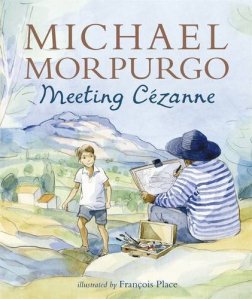 Ten-year-old Yannick leaves Paris to stay with his aunt and uncle at their inn in Provence. He is excited to go because Provence is where Cezanne, “the greatest painter in the world,” painted his picture. He works in the inn, setting tables, clearing tables, filling carafes of water, and cutting bread. Uncle Bruno teaches him to cook and make chocolate mousse and creme brulee. When a famous painter visits the inn and Yannick accidentally throws the drawing the painter scribbled on the paper tablecloth into the fireplace, he follows him back to his chateau to ask for another drawing. Yannick thinks the artist is Cezanne, but the artist signs another name, Picasso. Soft watercolor illustrations decorate the charming description of the culture of 1960s Provence. mjw
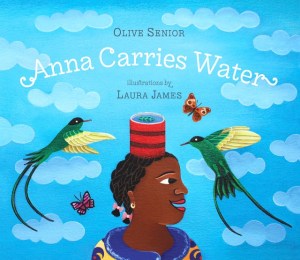 Anna, the youngest child in her large Jamaican family, wants to fetch water and carry it on her head like her brothers and sisters do. But, she cannot even balance an empty coffee can on her head. Anna is determined and she finally does succeed when the cows in Mister Johnson’s field frighten her and she runs home with her full coffee can on her head. She doesn’t spill a drop. The Jamaican landscape, a Jamaican flag, dasheen leaves, and Anna’s family are presented in interesting, bold acrylic paintings in tropical colors. mjw
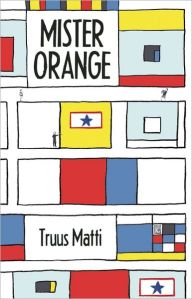 In 1943, when his older brother joins the army, 12 year-old Linus Muller, takes over the delivery job in his family’s grocery store in Manhattan. He befriends an eccentric customer, Mr Orange, who always orders a crate of oranges and is based on the Dutch painter, Piet Mondrian. They discuss the war, music, art, comic books and superheroes, and imagination. This is a first-rate historical novel about the artist and Linus Muller’s changing perception of the war. An afterword offers facts about Mondrian’s work and years in New York City. Further Resources for reading, watching on the Internet, and viewing Mondrian’s art in museums are also included. mjw
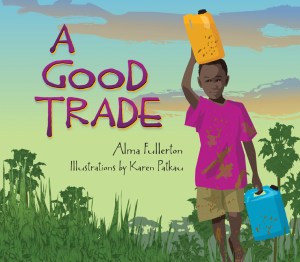 Kato, a young Ugandan boy, carries two jerrry cans of water every day from the village well to his family. He passes cattle fields, soldiers standing guard, and an aid worker’s truck that is filled with colorful shoes. He finds a white poppy in the field and trades it for brand new shoes. The poppy is a symbol of peace and goodwill. Bright, geometric digital collage pictures provide a snapshot of Kato’s war-torn village life. mjw
 Zeraffa was a female giraffe who lived in the Jardin des Plantes in Paris for 18 years. She was a gift from Muhammad Ali of Egypt to King Charles X of France. Magical watercolor illustrations, with detailed decorative patterns bring exotic Zeraffa’s 2,000 mile journey down the Nile, three-week sail across the sea, and 550 mile walk across France to life. When she arrived in 1827, all of Paris fell in love with her. Bakers even baked giraffe biscuits. The beautiful, lush text creates a fairytale sense of wonder in this true story. An author’s note tells more about Zeraffa. mjw
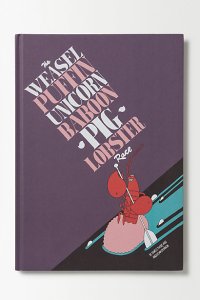 In this psychedelic children’s story, the reader follows six competitive creatures as they claw, charge, and cheat their way to the finish line using custard trampolines, banana diggers, and chocolate submarines to navigate through each animal’s unique terrain. A lone competitor stays truthful, giving a twist to the story’s end. His morality helps convey an important lesson: cheats never prosper. Dream-like illustrations complement imaginative, quirky rhyme. A simple recipe for cheat’s fool, a dessert, follows the text. cc
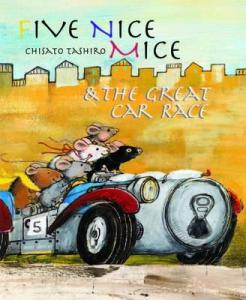 Detailed, delicate drawings depict the Great Car Race on Mouse Day starting in front of the Mouse Assembly Hall and the grand prize is The Ultimate Piece of Cheese. It’s the biggest cheese anyone has ever seen. Easygoing Taro with his yellow scarf, mechanic Kuro with his knotted tail, young Chibi with her green bracelet, curious Guro with one blue sock, and gentle Shiro with her long tail team up to design an unbeatable racecar. After overcoming many obstacles they cross the finish line and throw the Ultimate Cheese Party, where everyone is a winner. mjw
 A young girl who lives in Pienza, Italy, tells the history of pizza. She also describes the customs in her community, like her midday meal and Giovanni’s, where pizza is cooked the old-fashioned way in a wood-fired brick oven. She learns at the library that ancient Greeks ate flatbreads, that a favorite pizza was named after Queen Margherita of Italy, circa 1889, and that the first pizzeria opened in New York City in 1905. The English text appears with an Italian translation on each page. Also included are a pronunciation guide, a two-page history of pizza, and a recipe. mjw
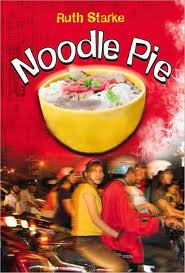 Spunky eleven-year-old Andy Nguyen, who grew up in Australia, is visiting family in Vietnam with his father, a refugee who escaped from Vietnam during the war. Insane traffic, vendors cooking on the sidewalk, street kids selling postcards to tourists, and an unfamiliar family that he has never met all contribute to Andy’s culture shock. His attitude changes as he learns more about his family and the cultural and economic differences between Vietnam and Australia. This fascinating coming-of-age story provides details about Vietnamese history and contemporary issues. Easy Vietnamese recipes and a note about street kids in Vietnam are also included. mjw
 The suspicious children of Fly Street are convinced that their elderly neighbor is a toad-eating witch. They call her names, write her a threatening letter, and believe that the little girl who visits her house must be under a spell. When they learn that the little girl is Meena’s granddaughter, they discover that there is nothing wicked-witchy about Meena. Meena treats them with kindness, patience, and slices of her delicious homemade cherry pie. Illustrated with bright abstract collages, this is a humorous and hopeful book about overcoming misunderstandings. mjw
