
 Inspired by a true story, this gritty dual timeline narrative tells about Australian high schooler Lisa and her father, who has ALS (Amyotrophic Lateral Sclerosis) and has six months to live. As he is dying, he recounts the devastating childhood time he spent at Auschwitz. He has kept the story and information about his Jewish family hidden – until now. His stories bring to life Lisa’s grandparents, aunts, and uncles she never had the chance to meet. Lisa also struggles with her own secrets. No one at school, including her boyfriend, knows she is Jewish or that her father is sick. This is an engaging read for young adults. The Walker Books website offers excellent classroom resources for the book. mjw Inspired by a true story, this gritty dual timeline narrative tells about Australian high schooler Lisa and her father, who has ALS (Amyotrophic Lateral Sclerosis) and has six months to live. As he is dying, he recounts the devastating childhood time he spent at Auschwitz. He has kept the story and information about his Jewish family hidden – until now. His stories bring to life Lisa’s grandparents, aunts, and uncles she never had the chance to meet. Lisa also struggles with her own secrets. No one at school, including her boyfriend, knows she is Jewish or that her father is sick. This is an engaging read for young adults. The Walker Books website offers excellent classroom resources for the book. mjw |
| Title: Inkflower Author: Suzy Zail Publisher: Walker Books. Australia Copyright: 2024 Original Language: English ISBN: 978-176059-39-4 Hardcover pages: 384 Age range: 14 up Genre: Historical fiction. Young adult literature Book setting: Australia. Germany Author’s ethnicity: Australian Author’s residence: Melbourne, Australia Subjects: Antisemitism, Amyotrophic Lateral Sclerosis, Auschwitz, Concentration camps, Death, Dying, Grief, Healing, Holocaust, Hope, Jewish, Love, Refugees, Survival, WW II |
Inkflower
Leave a reply
 Narrated by a young refugee, this beautiful and realistic picture book tells about having to leave home and the healing power of hope. The girl and her mother used to live in an apartment with a star-shaped lamp in their window. In their new country, everything is different – the language, their apartment, and the food. One day, the mother brings home art supplies so that they can make a cardboard star just like the one they had back home. That helps to make their new place feel a little more like home. The penultimate page shows the girl with a new friend, both carrying their musical instruments. The mostly blue and yellow illustrations were created with hand drawn contours and Photoshop. An author’s note explains that the book was inspired by Desnitskaya’s experience leaving Russia after the start of the Ukraine War. It is the author’s hope that his book can help children from different countries who have lost their homes to start loving the place where they were forced to be.


 In the pueblo of Palenque in Colombia at the turn of the 21st century, hardly anyone knows how to read or write. The young female narrator of the story is curious about the letters her older sister receives in the mail from her doctor friend. She hopes that they are love letters. Senor Velandia, the shop owner, is one of the few in the pueblo who can read. He helps the girl to read if she will help him in his shop. Slowly she learns the alphabet by writing letters on the ground with a piece of charcoal. She teaches the other children of the pueblo to read the letters with her and discover the magic of reading. The digital, richly colored, textured illustrations depict the Afro-Latine community. An author’s note explains the history of enslaved people in Central and South America, who were forbidden to read by the colonizing Spaniards. This story is woven together from the stories the author heard from various women across Colombia. mjw
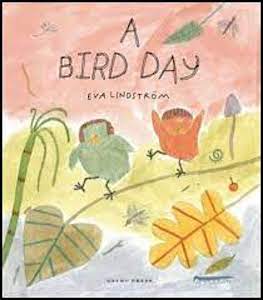 It’s an ordinary day for the bird family. The young ones, Lena and her little brother Bo, play, sing, hunt mosquitoes, and talk about their legs and toes. They have worm pie for dinner. Bo picks out the worms and only eats the pie shell. At night they fall asleep in their nest. Watercolor, gouache, and pencil illustrations show the funny facial expressions and cute hairstyles of the birds. The details in the family’s home are offbeat and interesting. This gentle story reflects on human behavior through this humorous bird family. mjw
 Set in 1980s Vietnam, Tho and his best friend, Lam, love cricket fighting, and soccer, but there is fear in his village that twelve-year-old boys, like them, will be conscripted into the Communist army. People are trying to leave Vietnam and move to safer countries. One day, Lam and his brother disappear. Tho’s family sells their furniture to make money to send Tho and his brother, Vu, away. Vu leaves first and a year later Tho boards a small boat to escape. He stows away on a pirate boat, crosses the South China Sea, and eventually gets to a refugee camp in Palawon in the Philippines, where he stays for six months. Finally, a Canadian elementary school teacher adopts him and he flies to his new home in Toronto. This harrowing story is based on true events in the author’s life. A map, a pronunciation guide, an afterword, and a brief recent history of Vietnam further enhance Tho’s intense account of his journey.
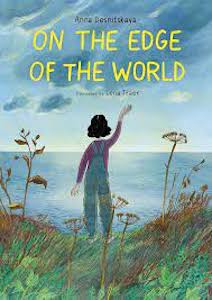 Vera and her family live on Russia’s Kamchatka Peninsula, which seems like the edge of the world. A map of the peninsula includes geographical features and native animal life. Vera shares her most valuable things – her feather collections; her favorite book: The Lion, the Witch, and the Wardrobe; her flashlight; and her favorite food – syrniki (cottage cheese and pancakes). She introduces her mom and her grandma but says that she doesn’t have any friends. She also describes her sekretik – a secret treasure of blue glass, Legos, and forget-me-nots. Lucas and his family live in a small town on the coast of Chile, which also seems like the edge of the world. A map of his country also includes geographical features and native animal life. Lucas shares his most valuable things – ammonite fossils, his soccer ball, his flashlight, his favorite food – a hamburger, and his favorite book: The Hobbit. He introduces his mom, dad, and his grandma. He, too, has no friends. One evening, both Vera and Lucas go to the beach, and blink their flashlights into the dark using the international language of Morse Code. “What if I had a friend over there, beyond the edge of the world?” If they look hard enough, they’ll find that we’re all so very similar, and connected to each other. One set of endpapers shows the Morse Code. The other endpapers present a map depicting Russia, Chile, and the 9942 miles of Pacific Ocean between the children’s homes. The interesting illustrations were created digitally in this unique flip-formatted, two-story picture book
 OmniLibros