
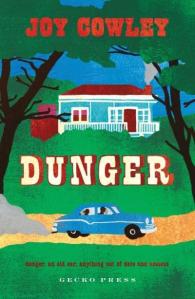
 Alternating chapters are narrated by eleven-year-old William and his fourteen-year-old sister Melissa. Due to financial problems, their holiday in Queenstown is cancelled and the siblings are roped into staying with their bickering, hippie grandparents to help fix up their old bach (holiday house) in Sounds. William and Melissa are taken out of their comfort zone and must survive without cell-phones and electricity, but their hard work is rewarded with one thousand dollars apiece. When an accident occurs, Melissa and Will’s ability to work together is put to the test and they finally realize what it means to be a family. cc Alternating chapters are narrated by eleven-year-old William and his fourteen-year-old sister Melissa. Due to financial problems, their holiday in Queenstown is cancelled and the siblings are roped into staying with their bickering, hippie grandparents to help fix up their old bach (holiday house) in Sounds. William and Melissa are taken out of their comfort zone and must survive without cell-phones and electricity, but their hard work is rewarded with one thousand dollars apiece. When an accident occurs, Melissa and Will’s ability to work together is put to the test and they finally realize what it means to be a family. cc |
| Title: Dunger Author: Joy Cowley Publisher: Gecko Press Copyright: 2013 Original language: English ISBN: 978-1-877579-46-2 Paperback pages: 168 Age range: 10 up Genre: Fiction Book setting: New Zealand Author’s residence: New Zealand Awards: 2014 New Zealand Post Book Award Subjects: Brothers and sisters, Grandparents, New Zealand, Oceania |
Dunger
Leave a reply
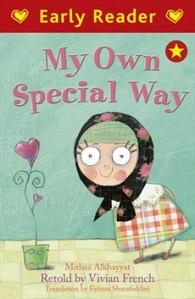 Hamda feels left out. She wants to make necklaces, go shopping, and bake cakes like her older sisters do. She has also made up her mind that she wants to wear the veil. She chooses four different scarves and unsuccessfully tries four different ways to wear them. She finally finds her own special way to prove she’s a big girl. Told in five short chapters and illustrated with bold, colorful patterns, this entertaining story focuses on the Muslim experience of wearing the veil mjw
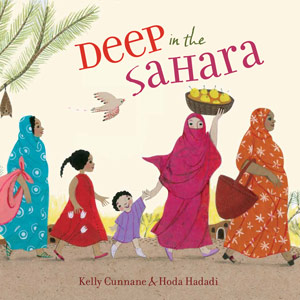 Like most Muslim girls between the ages of nine and 15 in Mauritania, Lalla wants to wear a malafa, the veil that covers women’s heads and clothes in public. She learns from her mama, her older sister, market ladies, and her grandmother that the malafa is more than beauty, mystery, tradition, and belonging. It is for faith. The second-person narrative and cut-paper collage illustrations explain potentially unfamiliar customs and observances of faith. An author’s note and a glossary of Hassaniya words is included. mjw
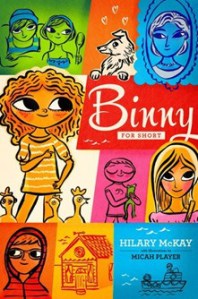 After her father’s death, money is tight, and eleven-year-old Binny and her family move to a cramped apartment, where their dreadful old Aunty Violet gives away Binny’s adored dog Max. They move again when Aunty Violet dies and bequeaths to them a seaside cottage. There, Binny meets Gareth, the lonely, angry boy next door and good-looking Liam, who lets Binny join the crew on his boat. Other delightful characters are Binny’s insightful, loving mother, big sister Clem, and hilarious, independent little brother James. Family life ups and downs are heart-warming, entertaining, and lead to a very satisfying ending. mjw
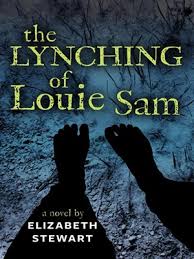 In 1884, in Washington Territory just miles from the British Columbia border, 15-year-old George Gillies and his siblings discover a local white settler murdered. Suspicion falls on 14-year-old Louie Sam, a member of the Stó:lo tribe. George and his friend Pete secretly follow a lynch mob into Canada, where Louie Sam is seized and hanged. But, George and his father have doubts about Louie Sam’s guilt. Based on the only recorded lynching to occur on Canadian soil, this is a gripping story about racism, injustice, mob mentality, and discrimination. A final note provides historical facts. mjw
 This semi-autobiographical wordless graphic novel illustrates the story of a young boy who emigrates with his family from an Asian land to New York City. Facial expressions, body language, and colors in the whimsical, abstract watercolor and digital art depict his transition and triumph in discovering his new place in a foreign landscape. An author’s note describes her journey at age four from Korea to Washington D.C. This universal tale would be useful with immigrant populations in any community. mjw
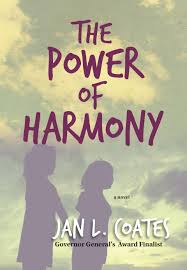 TIn 1968, in the coal mining town of Springhill, Nova Scotia, nine-year-old Jenny dreams of being a famous singer, but she suffers from stage fright and has become the target of bullies at school. She makes friends with Melody, a proud Mi’kmaq girl who has moved from a residential school. The girls bond. They both love books, nature, and music. The powerful harmony they develop helps them face challenges of peer cruelty, racism, and grief. The time and place of socially evolving Canada are captured perfectly in the first-person narration. mjw
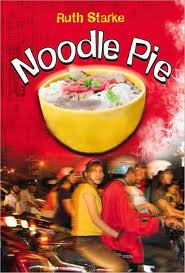 Spunky eleven-year-old Andy Nguyen, who grew up in Australia, is visiting family in Vietnam with his father, a refugee who escaped from Vietnam during the war. Insane traffic, vendors cooking on the sidewalk, street kids selling postcards to tourists, and an unfamiliar family that he has never met all contribute to Andy’s culture shock. His attitude changes as he learns more about his family and the cultural and economic differences between Vietnam and Australia. This fascinating coming-of-age story provides details about Vietnamese history and contemporary issues. Easy Vietnamese recipes and a note about street kids in Vietnam are also included. mjw
 The suspicious children of Fly Street are convinced that their elderly neighbor is a toad-eating witch. They call her names, write her a threatening letter, and believe that the little girl who visits her house must be under a spell. When they learn that the little girl is Meena’s granddaughter, they discover that there is nothing wicked-witchy about Meena. Meena treats them with kindness, patience, and slices of her delicious homemade cherry pie. Illustrated with bright abstract collages, this is a humorous and hopeful book about overcoming misunderstandings. mjw
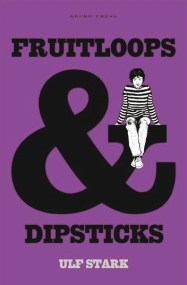 When her new teacher mistakes twelve-year-old Simone for a boy, the excitement and complications of her double life begin. Quirky and eccentric characters; amusing episodes; and themes encompassing teenage identity, sexuality, gender, intergenerational friendships, and death make this an interesting and entertaining story. Simone’s world of fruitloops and dipsticks includes an impulsive and artistic mother, ducks in the classroom, lost dogs, and kooky friends. First published in Sweden in 1984, this beautifully written first person narration is a product of its time with a real Scandinavian flavor. mjw
 OmniLibros