
 When Papa Rabbit doesn’t return home as expected after many seasons of working in the great carrot and lettuce fields of El Norte, Pancho sets out on a dangerous journey to find him. He packs up Papa’s favorite meal: mole, rice and beans, warm tortillas and a jug of aguamiel. A cunning coyote offers to guide Pancho on his journey in exchange for some of the sustenance he brought along. The pair travel until all the food is gone and the coyote decides he’s still hungry…for rabbit. In this allegorical tale, Tonatiuh sheds light on the hardships faced by thousands of families who seek out opportunities at better lives for their children and cross the Mexican border into the U.S. illegally. cc When Papa Rabbit doesn’t return home as expected after many seasons of working in the great carrot and lettuce fields of El Norte, Pancho sets out on a dangerous journey to find him. He packs up Papa’s favorite meal: mole, rice and beans, warm tortillas and a jug of aguamiel. A cunning coyote offers to guide Pancho on his journey in exchange for some of the sustenance he brought along. The pair travel until all the food is gone and the coyote decides he’s still hungry…for rabbit. In this allegorical tale, Tonatiuh sheds light on the hardships faced by thousands of families who seek out opportunities at better lives for their children and cross the Mexican border into the U.S. illegally. cc |
| Title: Pancho Rabbit And The Coyote: A Migrant’s Tale Author: Duncan Tonatiuh Illustrator: Duncan Tonatiuh Publisher: Abrams Books for Young Readers, an imprint of Abrams, New York Copyright: 2013 ISBN: 978-1-4197-0583-0 Hardcover pages: 32 Age range: 6-9 Genre: Picture book Author’s ethnicity: Mexican-American Awards: 2014 Pura Belpré Award (Author and Illustrator Honor), Tomás Rivera Mexican American Children’s Book Award Subjects: Allegories, Animals, Central America, Coyotes, Mexico, Migrant labor, Migration, North America, Rabbits, Voyages and travels |
Pancho Rabbit And The Coyote: A Migrant’s Tale
Leave a reply
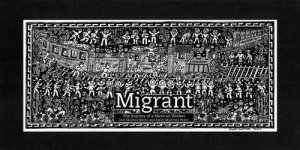 In this striking, thoughtful first-person narration, a Mexican boy tells of his journey to the United States with his family as they face many dangers. The uncertainty all illegal immigrants face arouses empathy for the real risks surrounding relevant political issues, namely, migrant journeys taken in hopes of finding work and a better life. This bilingual, codex-style book literally unfolds as the story progresses and offers a straightforward Spanish translation on the reverse side of the English version. Brilliant illustrations in charcoal blacks and greys on amate, bark paper, are reminiscent of pre-Hispanic codices. cc
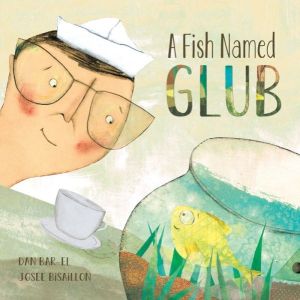 As Glub the fish swims around in his glass bowl on the counter, he ponders big questions in life: “Who am I?” “What do I need?” “What is a home?” He finds the answers he seeks by listening to the lively, colorful characters who eat at Foster G. Williker’s diner. Through Glub, these characters, including Foster, find answers of their own as they look into the bowl while Glub swims around painting pictures in bubbles of their dreams and long forgotten desires. This power to show people their dreams comes in handy as Glub is able to help Foster achieve his desperate desires of adventure and change . Rich illustrations accompany lively, lyrical dialogue that alternates between humans and Glub’s personal thoughts. cc
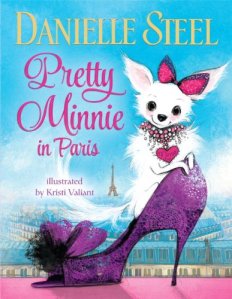 Minnie, a fashionable teacup-sized Chihuahua, is a little dog with big style. She does everything with her owner, Francoise. They like to go to the top of the Eiffel Tower, go to their favorite bistro for lunch, and rice their bicycle in the Jardin du Luxembourg. One day, Minnie is invited to the big Paris fashion show but she gets separated from her owner and lost in the chaos of a busy, noisy runway show. The pampered pup becomes the star of the show when a model wearing a wedding dress picks her up and struts down the runway. The model and Minnie meet the flash of a photographer’s camera at the end of the runway and the photo is published in the newspaper the next day. A gorgeous Paris backdrop and adorable outfits make this beautifully illustrated tale perfect for young girls. cc
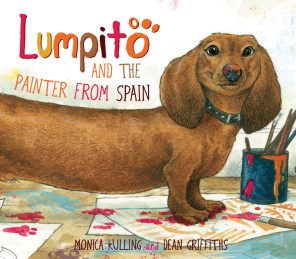 Lump and Big Dog do not get along. When Lump gets the opportunity to get a break from Big Dog, he eagerly tags along on a trip to France with his master David. At the villa in France, Lump meets the famous painter, Pablo Picasso, and new playmates, Yan the dog and Esmeralda the goat. Picasso is positively enchanted with Lump, whom he calls Lumpito, the two become soulmates, and Lumpito refuses to leave. This charmingly illustrated book is based on the true story of Picasso’s love for a dachshund named Lumptio who became the subject of countless paintings and drawings. cc
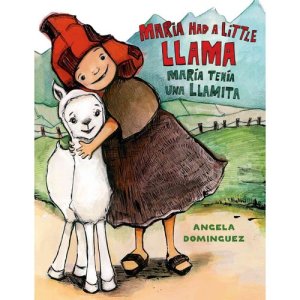 “Mary Had A Little Lamb,” the classic rhyme, has been transformed in this bilingual version which takes place in rural Peru. Each straightforward English verse is accompanied with the Spanish translation directly below, making this a perfect read-aloud. Readers are transported to Peru as they read the rhythmically flowing text and view warm gouache and ink illustrations. A wordless picture spread allows students to become authors, making up their own stories. Distinctive Peruvian features such as Andean dress, culture, and landscape are depicted. cc
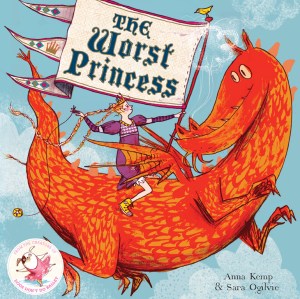 Feisty princess Sue thinks she’s finally received the happy ending she has always dreamed of when a price comes to rescue her from an eternity of boredom, but she’s sorely mistaken. The prince has firm opinions regarding the behavior of a princess and puts her in a tower to play dress up and style her hair. One day, Sue spies a ferocious dragon outside her window and they team up to put the patronizing prince back in his place. Finally, Sue can begin her own marvelous adventures. Detailed, eccentric illustrations accompany the cheeky rhyme of this twisted princess tale that empowers young girls to break away from traditional, outdated gender expectations. cc
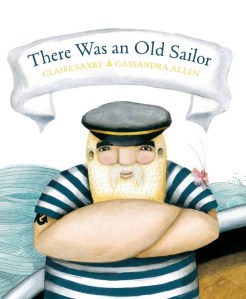 Offering a fresh new take on the classic story, “There Was an Old Lady Who Swallowed a Fly,” this playful, rhyming picture book begins with a white-bearded sailor swallowing a krill. As he progressively swallows larger and larger sea creatures, a retelling of all the previously eaten animals is given. Simple, cheerful illustrations accompany the rhyming and repetition, making this a perfect read aloud. At the end of the story, a two-page spread depicts all the previously swallowed creatures and offers factual information about each one. cc
 Charming crayon illustrations complement the story of an outcast penguin-rabbit hybrid. Little Benguin is rejected and feared by others on the tropical island due to his different appearance, causing his self-esteem to crash. One day, a hungry wolf appears and Little Benguin uses his superb skills of running and swimming, products of his mixed-species heritage, to lure the wolf away. This heroism is rewarded when his former tormentors throw a party in his honor. A contrived attempt to tackle racism and prejudice is present as the underlying message of the story hints that those who are perceived as unusual must prove their worthiness in order to blend in with the norm. cc
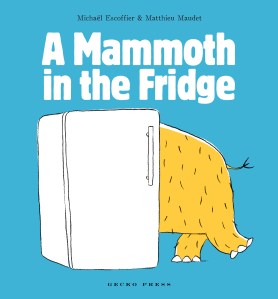 When Noah discovers a mammoth in the refrigerator, his horrified mother quickly calls the fire department. The sly mammoth evades escape, runs through the streets, and finds safe haven in a tree. Much to the firefighters’ dismay, the ice age mammal refuses to come down and he is left in the tree until nighttime when Noah’s little sister, Elsa returns to stealthily lure her friend back into her bedroom with a bunch of carrots. With a last warning to her rebellious mammoth, Elsa climbs into bed surrounded by all of her secret far-fetched pets. Simple text and four-color, 1960’s era illustrations lead to a wildly humorous and clever conclusion. cc
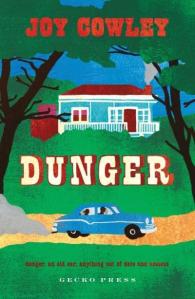 Alternating chapters are narrated by eleven-year-old William and his fourteen-year-old sister Melissa. Due to financial problems, their holiday in Queenstown is cancelled and the siblings are roped into staying with their bickering, hippie grandparents to help fix up their old bach (holiday house) in Sounds. William and Melissa are taken out of their comfort zone and must survive without cell-phones and electricity, but their hard work is rewarded with one thousand dollars apiece. When an accident occurs, Melissa and Will’s ability to work together is put to the test and they finally realize what it means to be a family. cc
 OmniLibros